Bacillus amyloliquefaciens N2B2 and its potential for co-cultivation with chitinolytic bacteria to control the growth of Agroathelia rolfsii and other fungal pathogens of tomatoes (Solanum lycopersicum L.)
Mar 13, 2026· ,,,,·
0 min read
,,,,·
0 min read
Ray Parcon
Reniel Joseph B. Cruz
Jessica D. Rey
Leilani S. Dacones
Jessica F. Simbahan
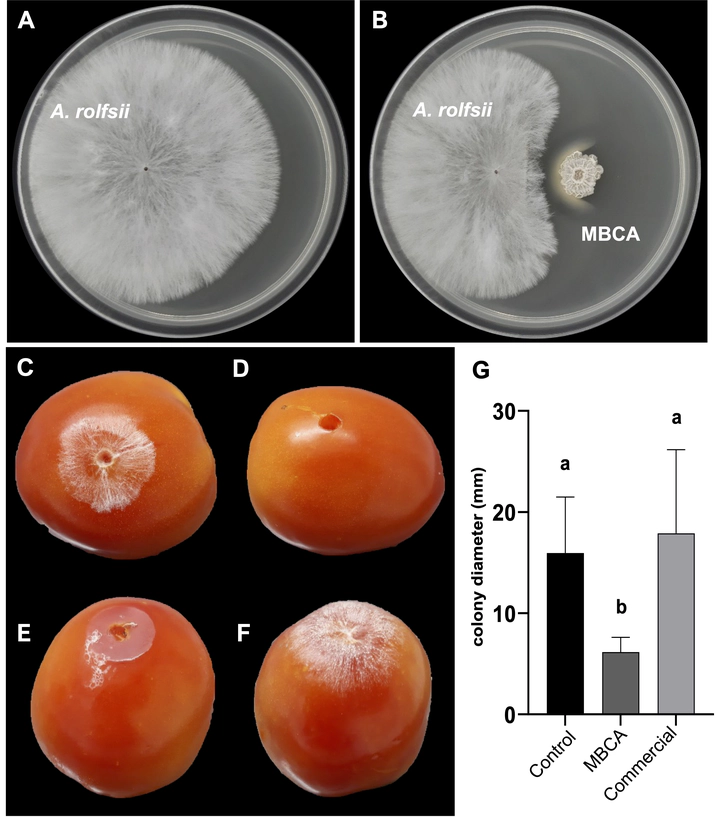 Image credit: R. Parcon
Abstract
Tomato farming suffers from yield losses due to outbreaks of fungal diseases. Current management strategies heavily rely on the use of synthetic fungicides. However, dependence on synthetic fungicides imposes risk on the environment and human health. An effective and sustainable alternative to managing fungal plant diseases is the use of biological control. This study aimed to test the efficacy of B. amyloliquefaciens N2B2 and its potential in combination with a chitinase-producing microorganism as a microbial biological control agent (MBCA) against fungal pathogens of tomato, namely, Agroathelia rolfsii, Alternaria sp., Cladosporium cladosporioides, Cladosporium tenuissimum, Colletotrichum scovillei, Fusarium equiseti, Fusarium oxysporum, and Geotrichum candidum. Screening 176 microbial isolates for chitinase activity provided three isolates producing the highest amount of chitinase. However, the chitinase production was not correlated with the control of fungal growth. Dual culture plate assays showed that B. amyloliquefaciens N2B2 inhibited the hyphal growth of all the fungal pathogens in the study. The effect of co-cultivation and the type of fungus significantly affected the zone of inhibition, and their interaction plays a significant role, suggesting that the effect of co-cultivation depends on the specific fungal species involved. In vitro studies showed that B. amyloliquefaciens N2B2 was 62.7% effective against Alternaria sp. in dual plate assays and 60.9% effective in suppressing fungal growth of A. rolfsii on detached tomato fruits. This study demonstrated the efficacy of B. amyloliquefaciens and showed the importance of bioprospecting for alternative and sustainable ways to control the fungal pathogens of tomatoes
Type
Publication
Journal of Biological Control 40(1):1–15